 By
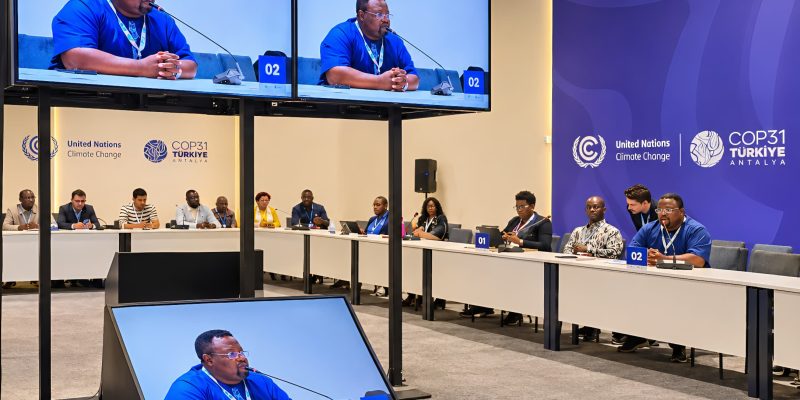
The African Coalition for Sustainable Energy and Access (ACSEA) has expressed deep disappointment at the failure of COP31 to reach an overarching political agreement. It calls for energy access to be treated as a climate priority, backed by public finance and African industrialisation on the road to COP32 in Addis ababa.
ANTALYA, Türkiye, 22 November 2026, the COP31 negotiations ended without an overarching political agreement. In a statement, ACSEA said it was « deeply disappointed », seeing in the breakdown a widening gap between the world’s climate ambitions and its willingness to address the energy and development realities of African countries.
For the coalition, an outcome unable to clearly reaffirm the transition away from fossil fuels, provide credible finance for vulnerable countries or establish a sufficiently resourced just transition framework would never have met the urgency of the climate crisis. But the failure to agree also comes at a cost: the communities that have contributed least to global warming remain without the predictable support they need to build resilience.
A contradiction at the heart of climate diplomacy
ACSEA points to a paradox: the world is debating electrification and cleaner technologies while millions of Africans still lack access to electricity. Energy access, it says, continues to be treated as a development concern at the margins of climate negotiations, rather than as a foundation for mitigation, adaptation and a just transition.
The coalition supports a science-based transition away from fossil fuels but rejects uniform obligations on vastly unequal economies. Countries that built their wealth on fossil-fuelled industrialisation must lead in cutting emissions and provide the finance and technology for others to move faster. African countries, it argues, must keep the policy space to expand renewables rapidly, while making time-bound use of transitional energy options where needed for reliability and industrial development, without creating long-term carbon lock-in.
Electricity, ACSEA stresses, powers hospitals, irrigation, cold chains, schools, early-warning systems and small businesses. Without reliable and affordable energy, climate adaptation weakens and the promise of green industrialisation cannot be realised.
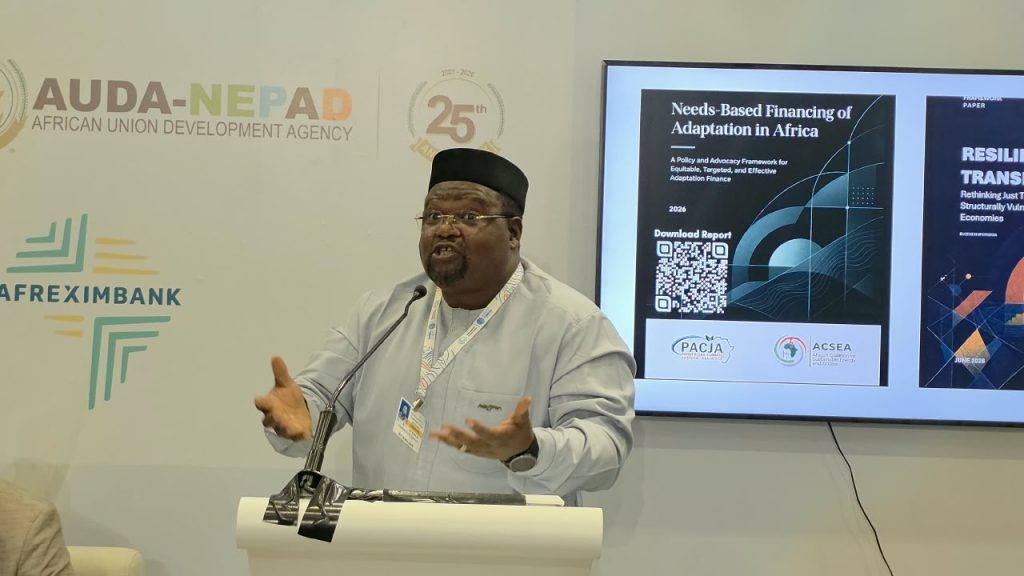
Dr Augustine B. Njamnshi, Executive Director of ACSEA in Antalya turkiye
« A just energy transition cannot mean that Africa is asked to abandon the energy pathways that enabled others to develop, without being given the means to build a better alternative, » said Dr Augustine B. Njamnshi, Executive Director of ACSEA.
No transition on credit
The coalition demands that developed countries honour Article 9.1 of the Paris Agreement through predictable, accessible and primarily grant-based public finance, supported by technology transfer and capacity building. Africa, it insists, cannot be expected to take on further unsustainable debt to deliver a transition that serves a global public good. It also calls for a genuine Just Transition Mechanism with real resources, and rejects the idea of Africa being reduced to an exporter of raw critical minerals.
On behalf of women, Dr Melania Chiponda, Executive Director of The SHINE Collab, condemned the impact of extraction and climate inaction: « We are not defeated. We are organising!
Five priorities for COP32
Ahead of COP32 in Addis Ababa, ACSEA calls on Parties, African governments and development partners to:
- Recognise energy access as a climate priority, including clean cooking, with measurable outcomes.
- Protect equitable transition pathways that reflect historical responsibility and Africa’s industrialisation needs.
- Deliver public climate finance, grant-led, under Article 9.1.
- Establish a meaningful Just Transition Mechanism with financing, institutional capacity and worker protections.
- Strengthen African energy sovereignty through regional power markets, transparent governance and participation of communities, women, youth and civil society.
ACSEA also urges African governments to enter COP32 with a coherent continental energy and climate justice agenda, while stressing that domestic leadership cannot substitute for the responsibility of developed countries to provide climate finance.
« Africa does not seek permission to develop. It seeks the means, fairness and policy space to build an energy future that serves its people and protects the planet, » the coalition concludes.
Elthon Djeutcha





Comments